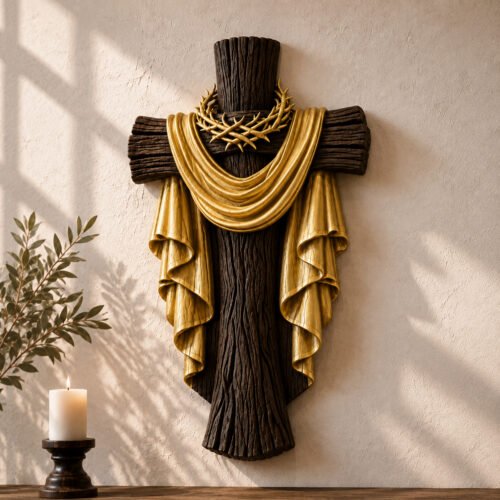

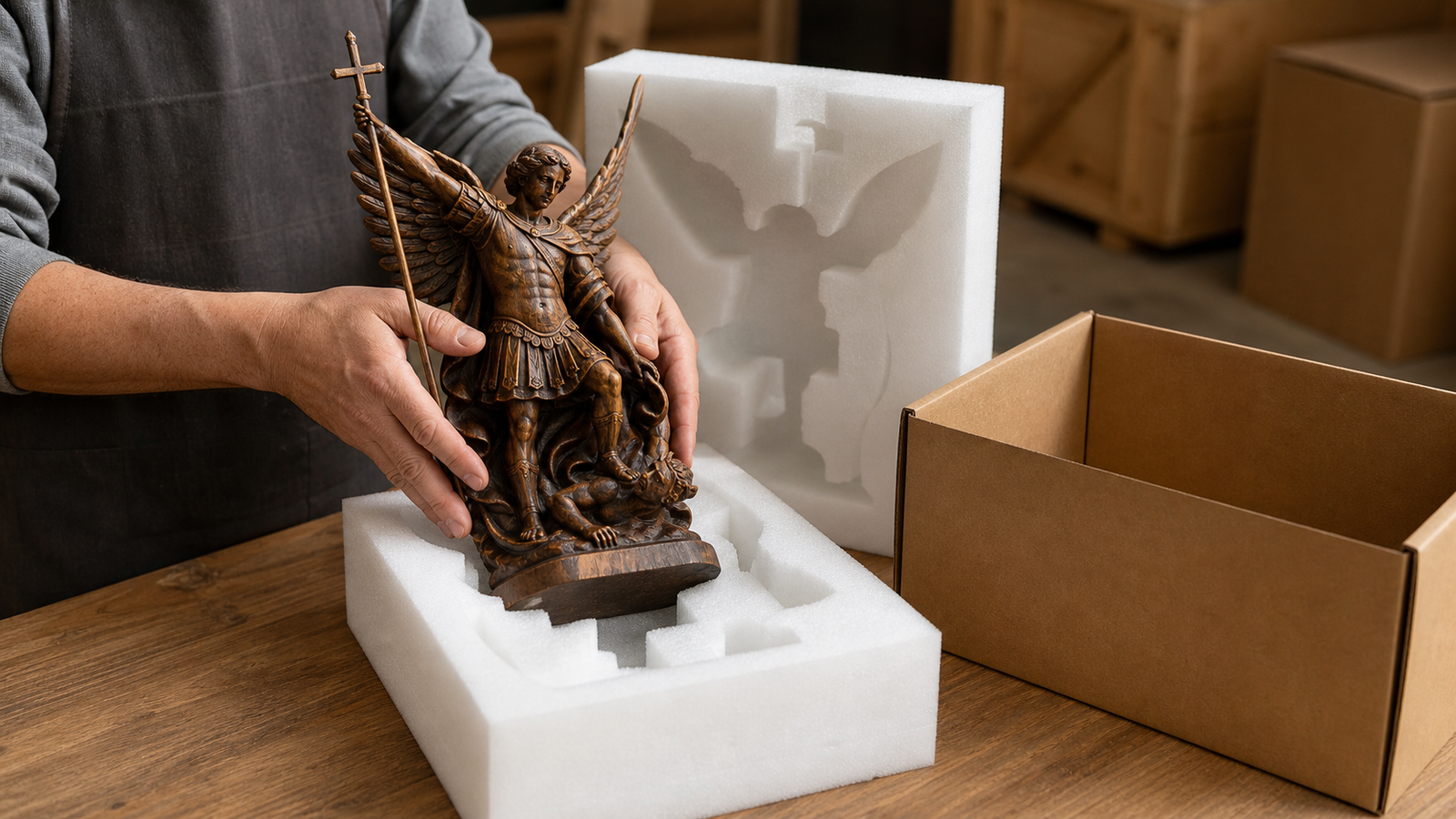
Safe packaging begins before a carton is selected. The correct method depends on four things: the carving’s shape, its fragile details, its finish, and how the order will be fulfilled. A flat relief, a winged statue and a church-scale carving should never be packed in the same way.
Flat Reliefs: Protect the Surface and Edges
For a flat wood relief, the main risks are abrasion, edge impact and movement inside the carton. We first allow painted, stained or hand-gilded finishes to cure fully. The relief is then wrapped in several continuous layers of EPE foam. The wrapping protects the carved face, edges and corners without placing adhesive directly on the wood or finish.
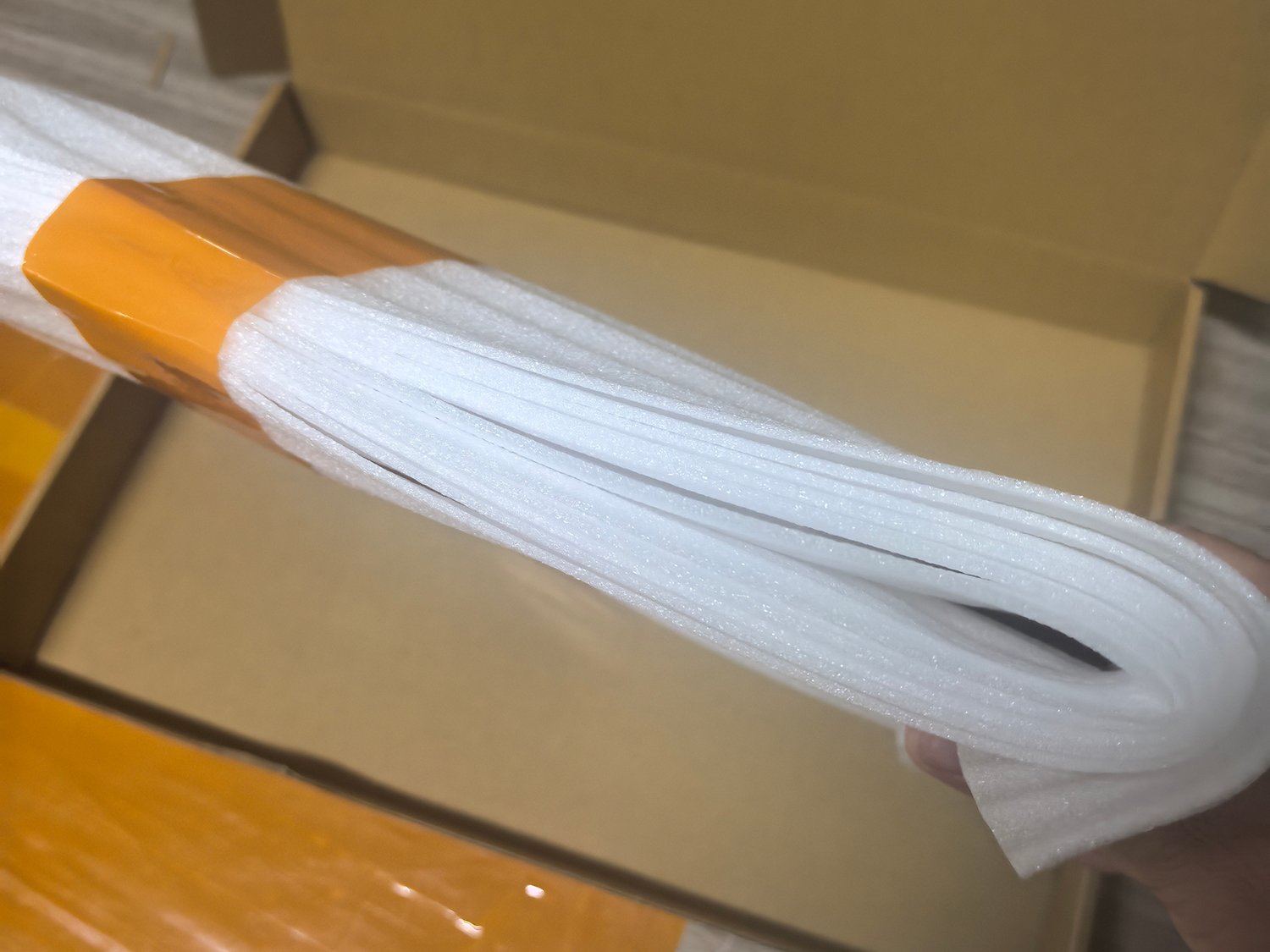
The wrapped piece goes into a close-fitting corrugated carton. A correctly sized box limits movement and reduces unnecessary dimensional weight. Tape secures the wrapping, but it should never touch the painted, gilded or natural wood surface.
Statues: Support Strong Areas, Clear Fragile Details
Three-dimensional statues require a different approach. Wings, fingers, staffs, crosses and other projections can break if ordinary wrapping transfers pressure to them. For detailed statues, we use two-piece contour-cut foam. The foam supports stronger areas such as the base and torso while leaving clearance around fragile details.
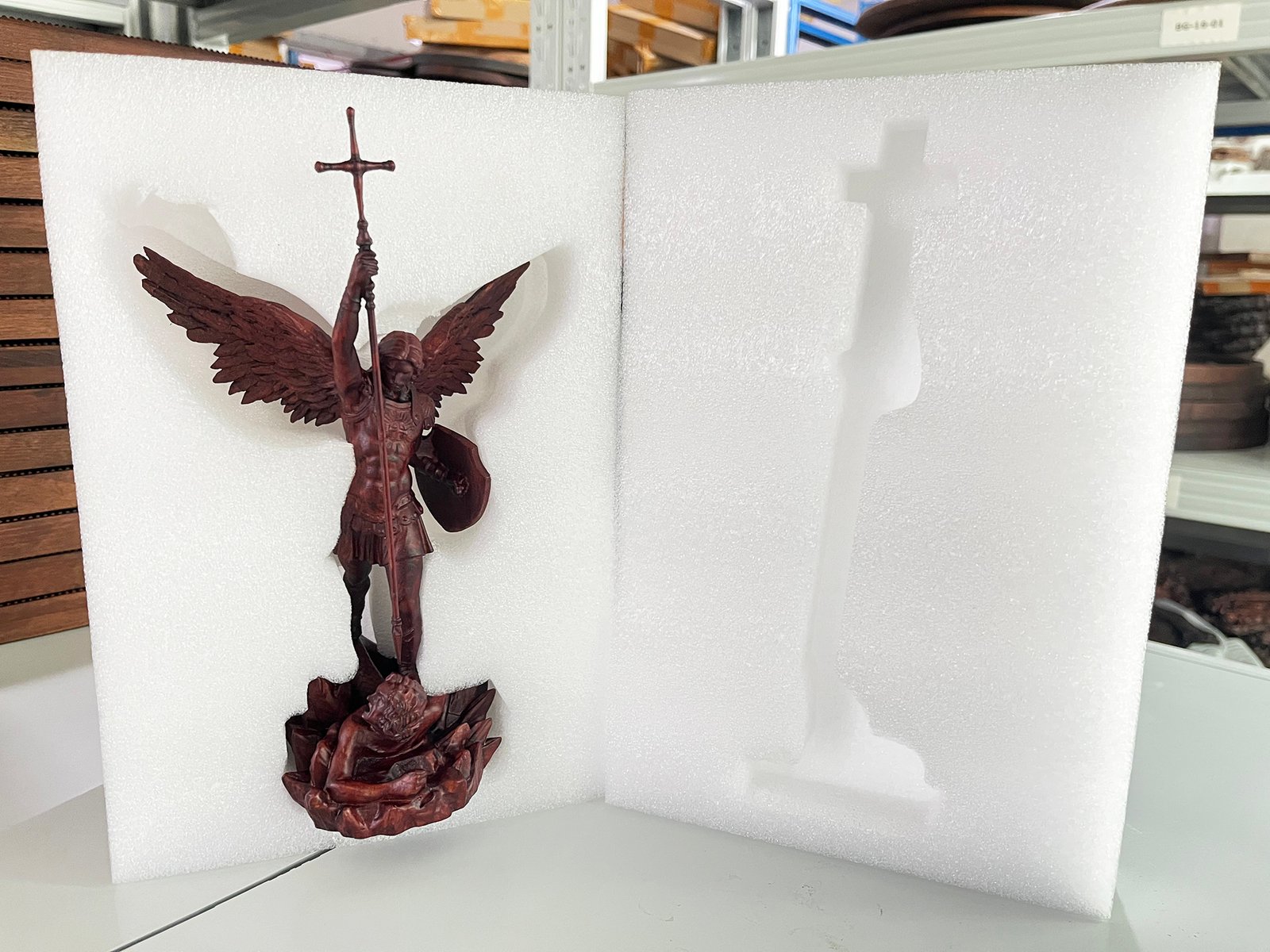
If an accessory can be removed safely, it is packed separately and clearly marked. The objective is not simply to add more foam; it is to prevent movement without turning a fragile part into a load-bearing point.
Retail, Dropshipping and FBA Need Different Workflows
Retail orders need reliable single-unit protection, a clean unboxing experience and clearly packed mounting hardware. The carton should be protective without being unnecessarily large.
Dropshipping is not a wholesale carton divided into individual orders. Each unit needs its own packing workflow: a neutral outer carton, accurate SKU identification, no supplier pricing, and any requested brand card, insert or label. Good return identification is also important when the shipment goes directly to the final customer.
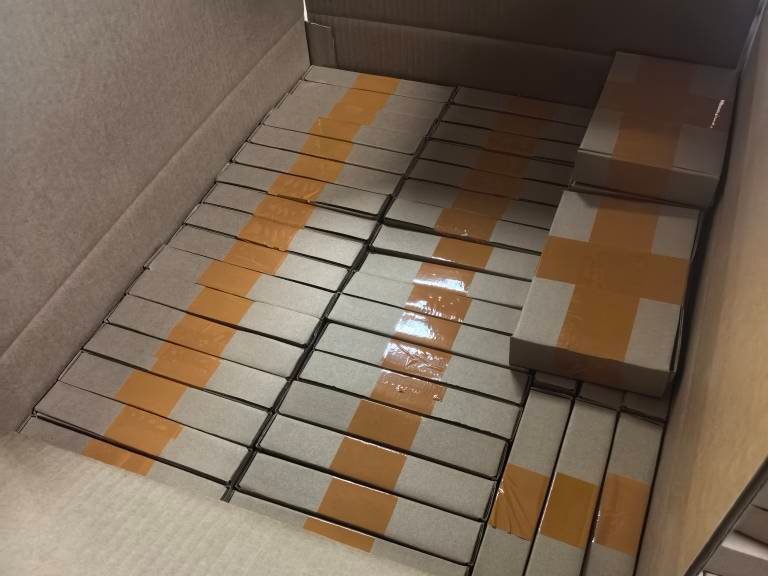
FBA and warehouse deliveries require every carving to be packed as an independent sellable unit. Product and carton labels must remain flat, readable and scannable. Individual units are then arranged securely in a master carton, with carton quantity, dimensions and weight recorded before dispatch. Platform requirements can change, so final labeling should always be checked against the destination warehouse’s current rules.
Large Carvings Require Structural Packaging
Large carvings face more than surface damage. Their weight creates greater forces during lifting, braking and handling, while an oversized panel or cross can flex inside an unsuitable package. We use a soft isolation layer first, followed by multiple EPE layers around the product. The protected carving is restrained at strong structural points inside a rigid wooden crate.
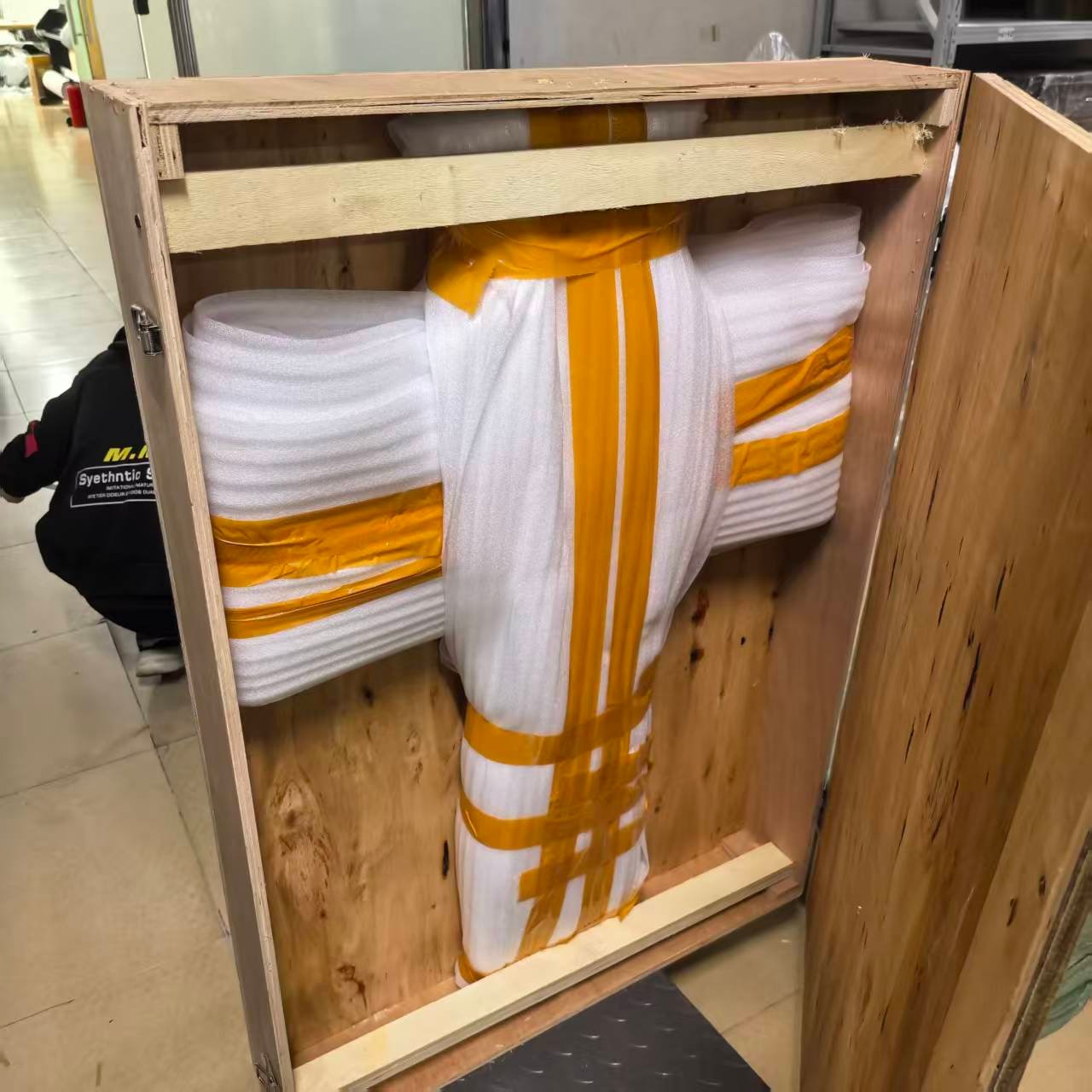
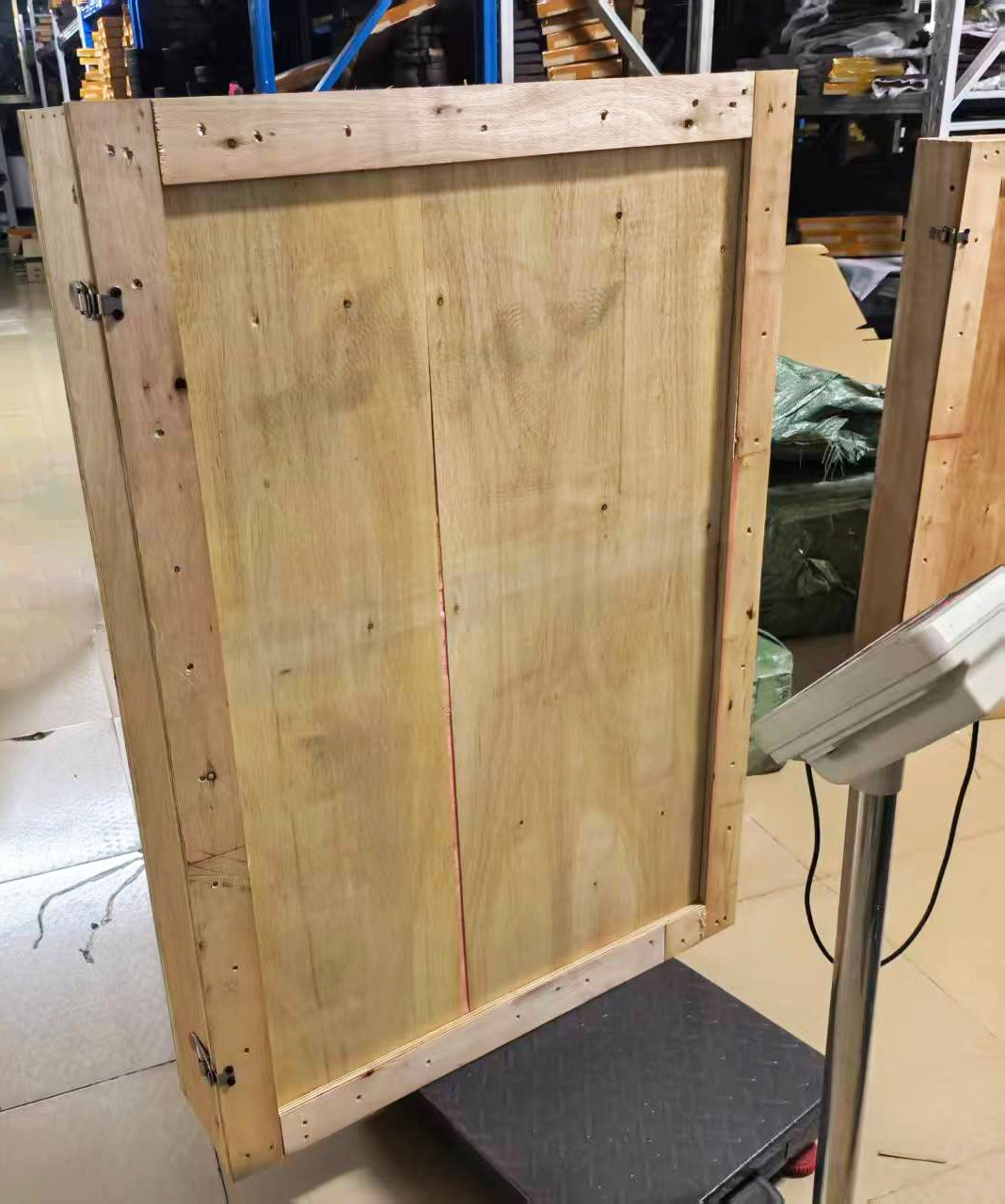
There should be no direct wood-to-crate contact. Fragile projections need clearance, while blocking and restraint must limit movement forward, backward, sideways and vertically. Before the crate is closed, we record the wrapped product, accessory location and internal fixing points.
What We Confirm Before Packing
- Carving type, dimensions, weight and fragile details
- Wood species, stain, paint or hand-gilded finish
- Single-unit, bulk, dropshipping, FBA or project delivery
- Destination and transportation method
- Required labels, inserts and branding
- Mounting hardware and installation instructions
Packaging should be planned with the product, not added as an afterthought. Tell us the carving type, size, quantity and destination, and we can recommend a practical packing method before production begins. Contact us about your project.
Leave your comment
Related posts
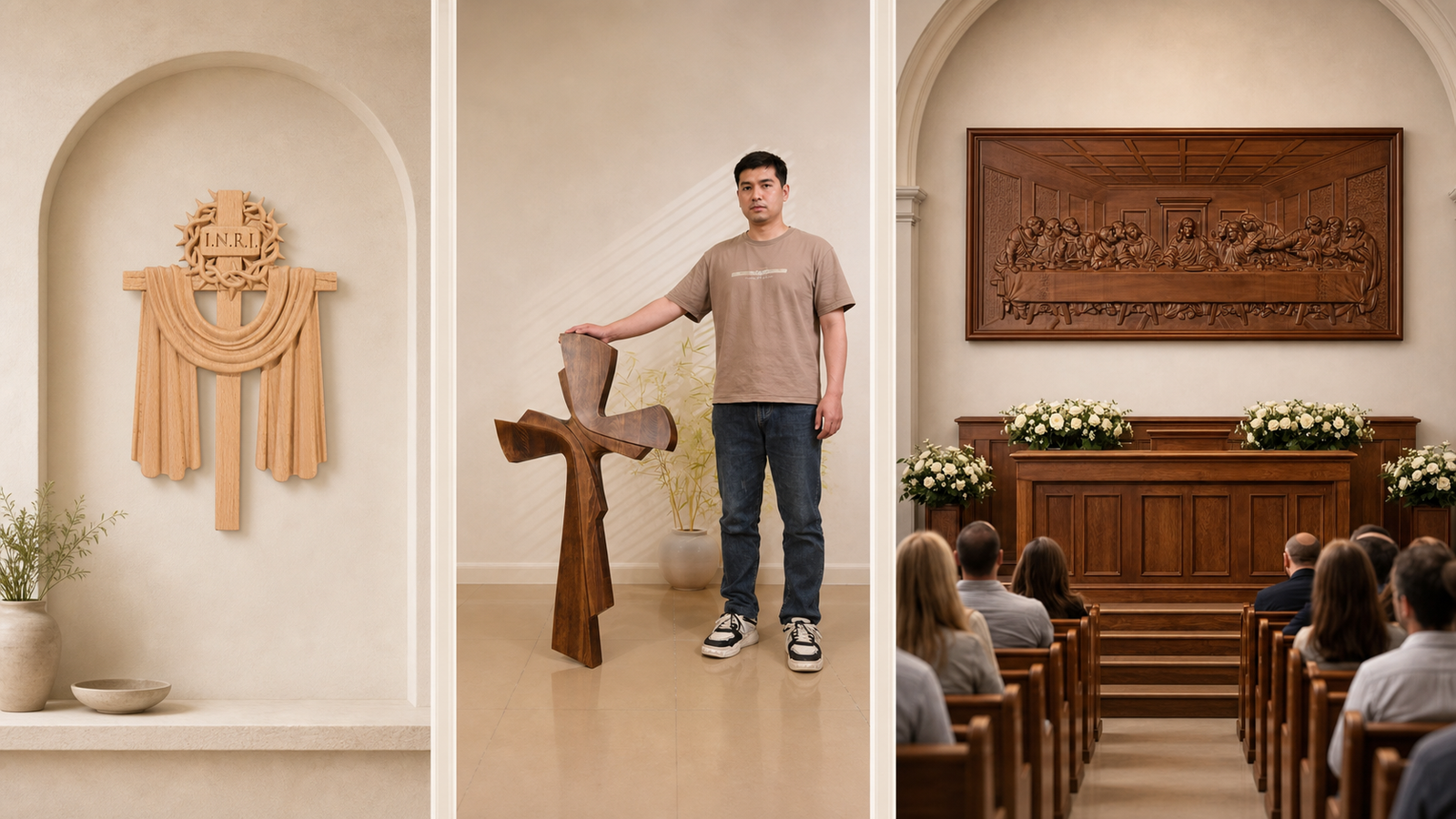
Compare sizes, depth, mounting and finishes for personal, retail and church use.
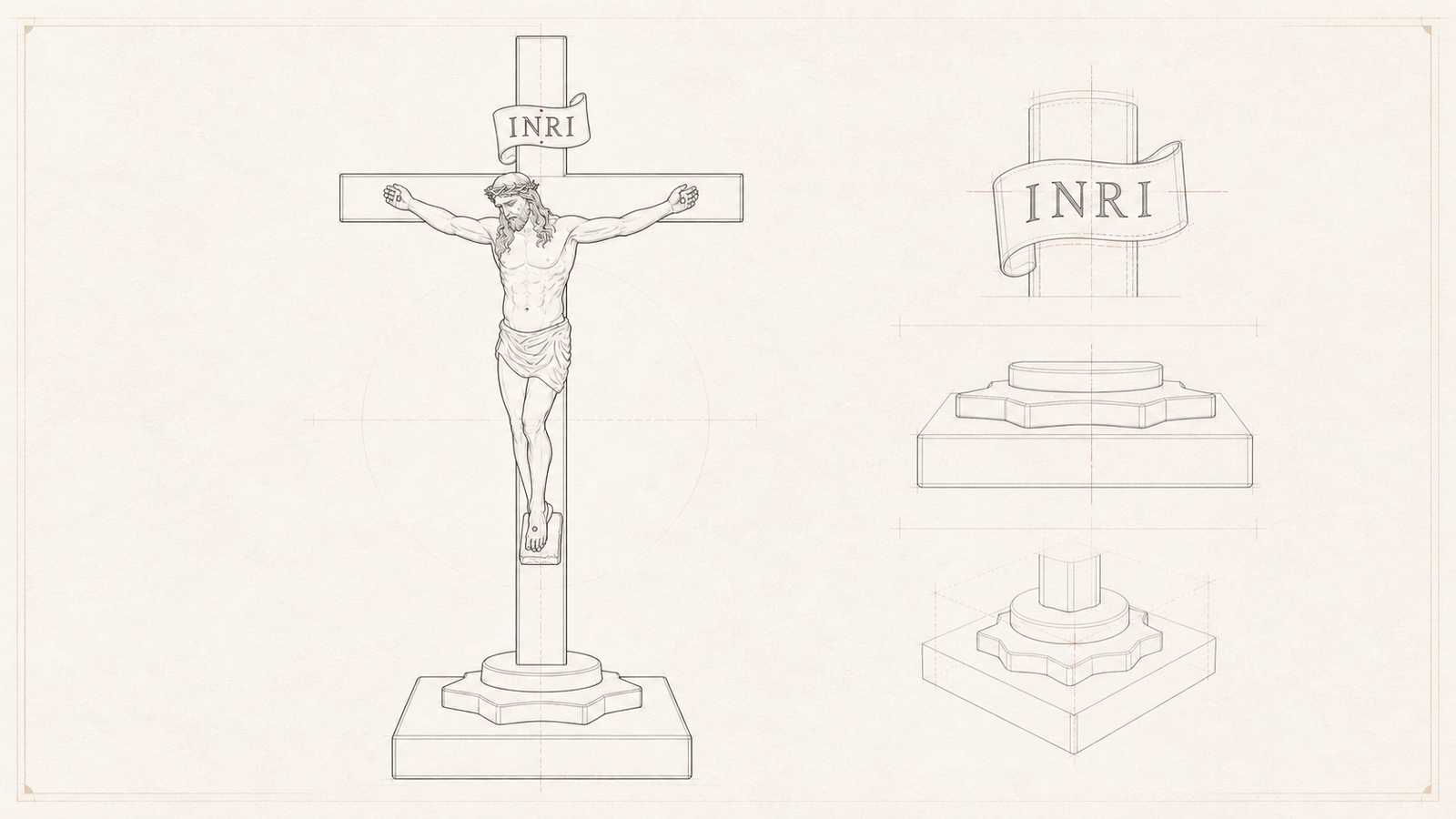
Follow a custom crucifix from an AI prompt and early concept to a refined drawing, production-ready 3D model and finished wood carving.